Getting to know ourselves better
Better knowing ourselves (LO1, part 1)
Getting to know ourselves is an important part of knowing what we bring to conversations, and how we tend to engage with others. Our background, experiences, training, culture, gender, and other factors all contribute to who we are.
In this section, we invite you to examine some of your experiences and biases. By becoming more self-aware, we bring more knowledge and tools to difficult conversations.
 Learning activity: Getting to know ourselves better
Instruction:
1) Write down a few words that describe your feelings about difficult conversations. What happens when a conversation is going well? Consider what you hear, see, and feel.
2) Think a little about your background, such as:
- Where did you grow up?
- What education level do you have?
- What kind of job do you have/have you had?
- What is your cultural background?
- What hobbies and interests do you have?
3) Now for each of these points above, think of one way that this feature impacts your perspectives. This is key to recognizing how your experiences, perspectives, and biases influence the way you engage in conversations. These features of your personality, even if they seem small, can affect how you form opinions, and guide you through conversations.

Go to your Workbook and write your answers, and then click on the checkbox.
Now repeat this exercise but try to think of somebody else that you know well. How do they differ from you? How might that affect the way you communicate with each other?
By taking steps to understand your counterpart in a difficult conversation you are taking the first steps in ensuring safe and effective communication.
Go to your Workbook and write your answers, and then click on the checkbox.
If you want to go even further, Project Implicit’s Implicit association tests provide opportunities to learn more about your beliefs about gender, disability, religion, skin tone, gender, and more. Resource:
Implicit biases
In any conversation, each person’s dignity should be protected, and the people involved in the conversation should strive to maintain mutual respect. Implicit biases are one of the aspects that can threaten that dignity and respect in the conversation.
We all have biases; they‘re part of our learning and upbringing. They can both tell parts of our stories (who we are, what matters to us) and can cause harm when they knowingly or unknowingly impact situations (e.g., not shortlisting an interview candidate based on their gender).
Barriers to constructive conversations
In work, research, and school environments, there are some common ways that actions and behaviours that are barriers to constructive conversations.
Instruction: Explore the various behaviours by clicking on the titles in the list.
Perfectionism
A disposition to regard anything short of perfection as unacceptable
Favouritism
The practice of giving unfair preferential treatment to one person or group at the expense of another
Gossiping
Revealing personal or sensational facts about others
Back-channeling
Using secret, unofficial, or irregular means of communication (e.g., direct messaging on the side during a group meeting). Could be a positive approach (e.g., asking for clarification without disrupting the main conversation) or a negative one (e.g., using a back-channel to mock someone or their idea).
Comparison
Representing one thing or person to another (could be better, worse, or the same).
Self-worth tied to productivity
The belief that one’s value as a person is dependent on their success at accomplishing certain tasks.
Harassment
When an unpleasant or hostile situation is created especially by uninvited and unwelcome verbal or physical conduct.
Discrimination
The unjust or prejudicial treatment of different categories of people.
Power over
To assert control or authority over someone or something.
Bullying
The abuse and mistreatment of someone vulnerable by someone stronger, more powerful, etc.
Blaming
The act of assigning the responsibility for something negative to someone or something.
Teasing
Attempting to provoke or make fun of someone in a playful way.
Cover-ups
An attempt to prevent people’s discovering the truth about a mistake or crime.
Stonewalling
Delaying or blocking a process by refusing to answer questions or by giving evasive replies.
Interrupting
To break in with questions or remarks while another is speaking.
Fogging
In a negative sense: To make an idea or situation difficult to understand, sometimes by adding unnecessary or unrelated examples or elements.
In a positive sense: A way to neutralize criticism or hostility by vaguely agreeing with any truth in a statement (e.g., “You might be right”).
Have you ever noticed any of them during conversations, meetings, online spaces, or other interactions?
Very often, these actions come from feelings of shame. We address that concept here because our own feelings of shame can hinder a constructive conversation, and recognizing shame in others can help us to better understand them.
Before advancing in this topic, think about a definition for the word “shame”.
Instructions: Write your answer on the below text box, then click on “Compare” to see Brené Brown’s definition.
“The intensely painful feeling or experience of believing that we are flawed and therefore unworthy of love, belonging, and connection.”
–Brené Brown, Dare to Lead.

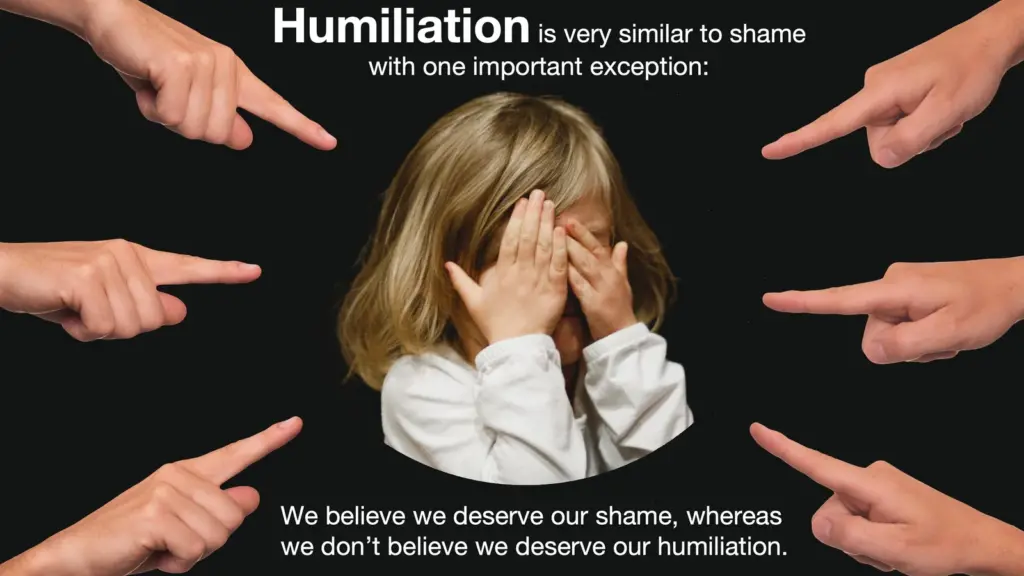
In contrast, humiliation is very similar to shame with one important exception: We believe we deserve our shame, whereas we don’t believe we deserve our humiliation.
Learning activity: Ways that barriers appears in the workspace
We have identified several common ways that barriers can affect communication. From the list below, write in your Workbook three examples that you have encountered – or engaged in – in your workplace (don’t worry – your responses are completely anonymous!).
- Perfectionism
- Favouritism
- Gossiping
- Back-channeling
- Comparison
- Self-worth tied to productivity
- Harassment
- Discrimination
- Power over
- Bullying
- Blaming
- Teasing
- Cover-ups
- Stonewalling
- Interrupting
- Fogging
For each of the three responses of barriers that you selected, please write a few sentences in your Workbook about how these behaviours have affected you or your work.
What is one commitment that you would be willing to make to start changing the things way you approach such responses in your life?
We understand that some of these topics may be uncomfortable to discuss. You are welcome to write down as much, or as little as you want.
Go to your Workbook and write your answers, and then click on the checkbox.
Try to look for signs or indicators that could suggest these behaviours are present in you, or in the people around you. Make mental notes of any occasions where such behaviours might be evident, and think about how you can respond accordingly. Ask yourself how these behaviours are impacting your life, and what changes you could make.
Shields
During a conversation, people often use strategies of disconnection to shield (hide) their feelings (which can be of shame). As you read/hear/see the examples, identify the ones you have done or experienced.

Moving Away
Withdrawing, hiding, silencing ourselves and keeping secrets.

Moving Towards
Seeking to appease and please.

Moving Against
Trying to gain power over others, being aggressive, and using shame to fight shame.
Learning activity: What are some of your shields?
The following questions are aimed at making you address your own shields, and can help identify areas that could present challenges during difficult conversations. Please write your answers in your workbook. You could also add some examples to our conversation space on Discord.
- Whom are you most likely to Move Away from?
- What are the specific triggers or situations at work that would prompt you to use the shield of Moving Away?
- Whom are you most likely to Move Towards?
- What are the specific triggers or situations at work that would prompt you to use the shield of Moving Towards?
- Whom are you most likely to Move Against?
- What are the specific triggers or situations at work that would prompt you to use the shield of Moving Against?
- Do you have a go-to shield that you grab in certain situations?
Assembling Your Armour
We all use armour to protect ourselves, but that armour prevents us from growing, being seen, and connecting. It might look like:
- I’m not enough.
- If I’m honest with them about what’s happening, they’ll think less of me or maybe even use it against me.
- No way am I going to be honest about this. No one else does it. Why do I have to put myself out there?
- Yeah. Forget them. I don’t see them being honest about what scares them. And they’ve got plenty of issues.
- It’s actually their issues and shortcomings that make me act this way. This is their fault, and they’re trying to blame me.
- In fact, now that I think about it, I’m actually better than them.
Source: Dare to Lead, Brené Brown
Learning activity: What stands in the way between you and a constructive conversation?
Instructions: Here are some things that might happen. Choose your top three to keep in mind as you work through the module.
- We avoid tough conversations, including giving honest and productive feedback.
- Rather than spending a reasonable amount of time proactively acknowledging and addressing the fears and feelings that show up during change and upheaval, we spend an unreasonable amount of time managing problematic behaviours.
- Diminishing trust caused by a lack of connection and empathy.
- Too much shame and blame, not enough accountability and learning.
- Perfectionism and fear are keeping people from learning and growing.
- You may want to choose some of the “armour” listed above, or anything else that comes to mind.
Go to your Workbook and write your answers, and then click on the checkbox.
Thank you for your work on this section. Keep these challenges in mind as we move forward–you’ll learn how to address and work through many of them.
Vulnerability
Learning activity: What do you think vulnerability is?
Instructions: Write your own definition then compare it with ours. You might also want to include what it feels like physically and emotionally.
Vulnerability is “uncertainty, risk, and emotional exposure. It’s that unstable feeling we get when we step out of our comfort zone or do something that forces us to loosen control.”
Source: Brené Brown, Daring Greatly.
Watch these videos from Brené Brown about shame and the importance of vulnerability.
Learning activity: Vulnerability worksheet
Let’s do some metacognitive work!
Myths of vulnerability
- Vulnerability is weakness
- I don’t do vulnerability
- I can go it alone
- You can engineer the uncertainty and discomfort out of vulnerability
- Trust comes before vulnerability
- Vulnerability is disclosure
- For each of the six myths of vulnerability, rate on a scale of 1-5 how much you need to “unlearn.” (1=none, 5=a lot)
_____ Vulnerability is weakness.
_____ I don’t do vulnerability.
_____ I can go it alone.
_____ You can engineer the uncertainty and discomfort out of vulnerability.
_____ Trust comes before vulnerability.
_____ Vulnerability is disclosure. - When was the last time you saw someone bravely facing uncertainty, risk, and emotional exposure?
- When was the last time you bravely faced uncertainty, risk, and emotional exposure?
- When you reflect on how you want to show up and be seen as a leader, what do vulnerability and courage look like for you?
- What is one way you’ll experiment with being more vulnerable at work, school, or home?
Go to your Workbook and write your answers.
Empathy misses
Now that we’ve talked about some aspects that can hinder a conversation, let’s talk about the powerful ways that empathy can strengthen and support a difficult conversation.

Empathy is not connecting to an experience; it’s connecting to the emotions that connect to the experience.
Learning activity: What does empathy look like?
Instructions: In this activity, you’ll learn more about empathy and how you experience it.
- Write your own definition of empathy then compare it with ours. You might also want to include what it feels like physically and emotionally.
- When I share something personal and vulnerable, and I really feel understood, it feels _______________________________.
- When I share something personal and vulnerable, and I don’t feel as if anyone understands, I feel _________________________________.
- When I share something personal and vulnerable, I like the person listening to (ideal empathic response):
Select all that apply.
_____ Make eye contact
_____ Look away so I don’t feel so self-conscious
_____ Reach out to hug me
_____ Give me my space
_____ Respond right away
_____ Just listen and stay quiet - When someone shares something painful and personal with me, I:
Select all that apply.
_____ Worry about saying the wrong thing
_____ Want to say something really comforting
_____ Get nervous
_____ Worry about not feeling anything
_____ Don’t know what to do if I really don’t want to know
_____ Want to fix it.
Go to your Workbook and write your answers, and then click on the checkbox.
There are no right and wrong answers, here. In fact, people will answer these questions in a wide variety of ways. That said, we want to draw your attention to a few “empathy misses”—ways that don’t actually show empathy, despite good intentions. The content below is from Dare to Lead by Brené Brown.
Case study: Making eye contact
One person who answered this question previously was autistic. She said that making eye contact would be the least desirable thing as it makes her feel uncomfortable.
In the same workshop, another person said that they wanted eye contact so they could feel better understood.
In a conversation it is essential to understand each participants needs and preferences. Another great reason for communication, even about the conversation!
Empathy misses
Empathy misses:
- Sympathy vs Empathy
- The Gasp and Awe
- The Mighty Fall
- The Block and Tackle
- The Boots and Shovel
- If You Think That’s Bad…
Sympathy vs empathy:
The friend who responds with sympathy (“I feel so sorry for you”) rather than empathy (“I get it, I feel with you, and I’ve been there”).
The gasp and awe:
The friend who hears your story and feels shame on your behalf. They may gasp and may tell you how horrified you should be (“Oh my goodness, I’d just die”) and you have to rush in to say (“No, it’s okay”) and try to make that person feel better.
The mighty fall:
The friend who sees you as the pillar of worthiness and authenticity. They are so let down by your imperfections and disappointed in you (“I just never expected that from you. I didn’t think you would ever be someone who didn’t do well. What happened?”)
The block and tackle:
The friend is so uncomfortable with vulnerability that they scold you (“What happened?! What was going through your head?”). Or the friend is looking for someone else to blame (“Who is that person? Who do they think they are?! Ugh.”)
The boots and shovel:
The friend who is all about making it better and, out of their own discomfort, refuses to acknowledge that you can actually be wrong and make terrible choices (“You’re exaggerating. It wasn’t that bad. You rock. You’re perfect. Everyone loves you”). They are trying so hard to make you feel better that they aren’t able to connect with your emotions.
If you think that’s bad:
The friend who confuses “connection” with the opportunity to one-up you. Example: “That’s nothing. Listen to what happened to me one time!” It’s a different situation that simply sharing an experience, which many folks with ADHD may do as a way to connect.
Don’t import your emotions, values, opinions, or experiences onto them, such as: “You must feel good/bad/excited”… They might feel the opposite. Let them tell you how they feel; ask them how they feel.
Empathy plays an important role in truly understanding the other person and connecting with their emotions.
Empathy skills
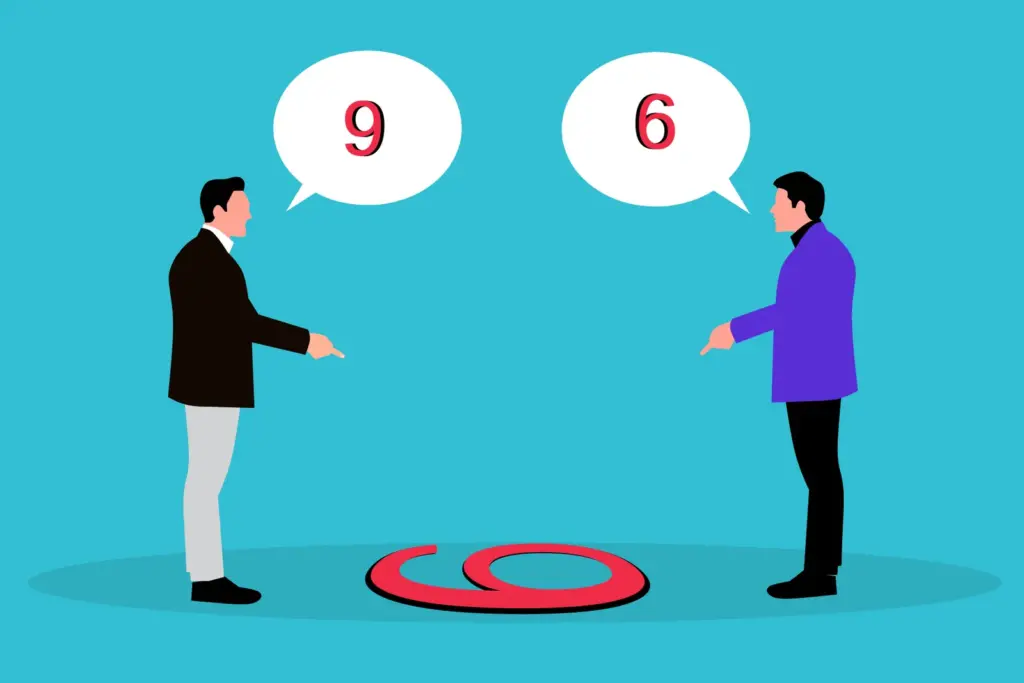
1. To see the world as others see it, or perspective taking

2. To be nonjudgmental
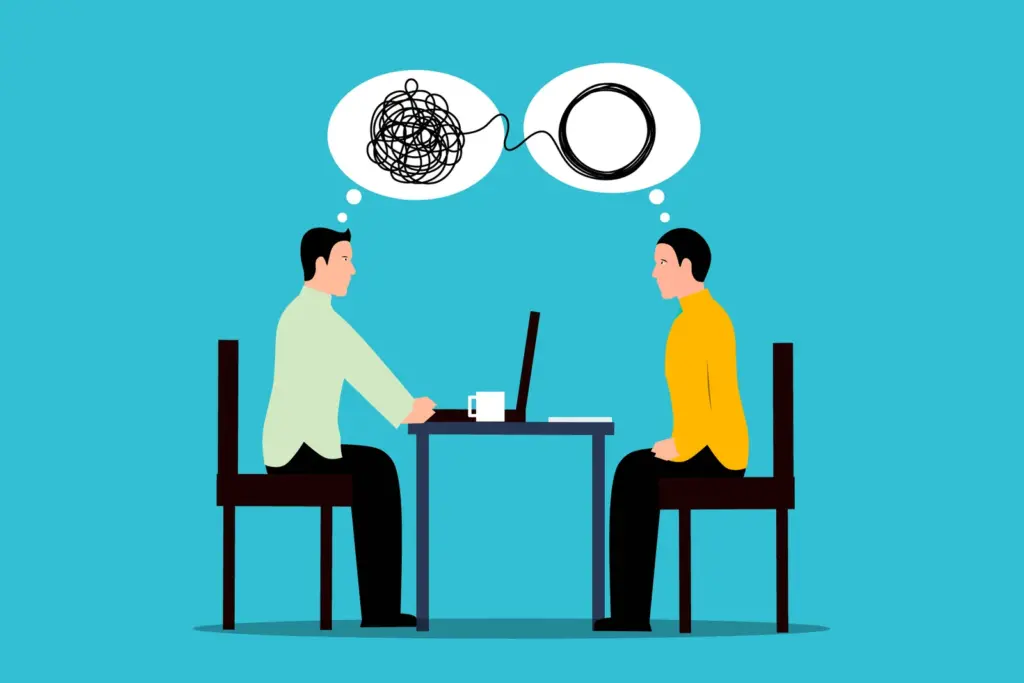
3. To understand another person’s feelings
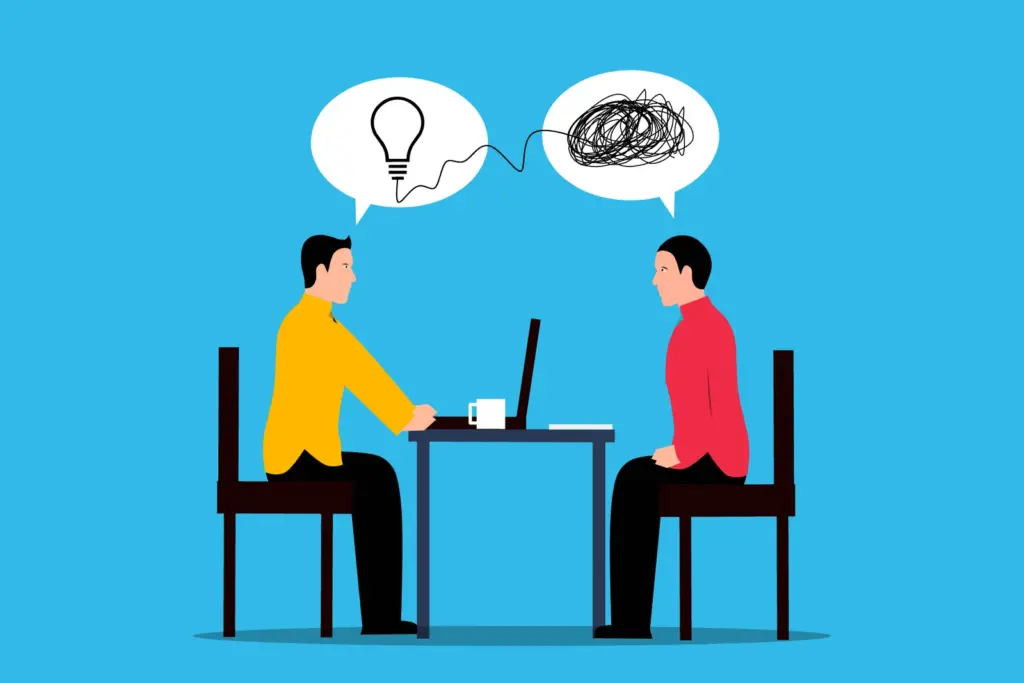
4. To communicate your understanding of that person’s feelings
5. Mindfulness
Learning activity: Empathy skills and misses
- When you think about these six types of empathy misses, is there one or two that shut you down?
- What emotion comes up for you when your sharing meets one of these barriers, and how does that affect your connection with the person?
- On the flip side, how do you rate your own empathic skill?
- Are there one or two empathic misses that you typically use that you want to change?
- What are your strongest empathy skills?
Go to your Workbook and write your answers then continue.